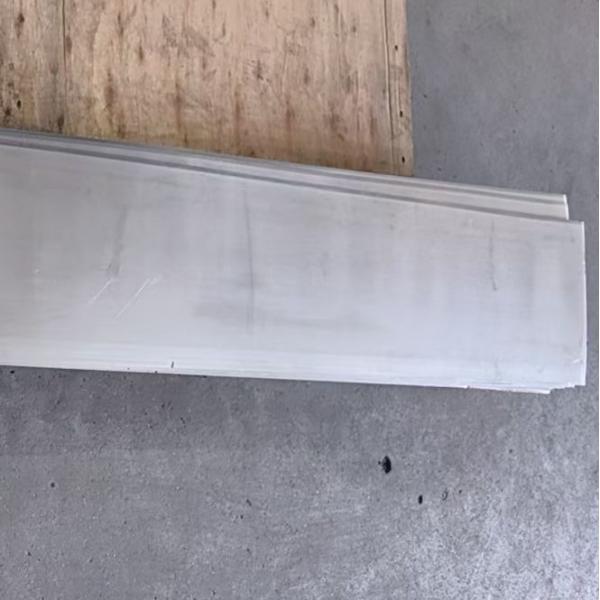
Hastelloy C276 Plates UNS N10276 Precision Rolled Sheets for Acid
and Chloride Service
Overview
Hastelloy C276 Plates are nickel‑molybdenum‑chromium superalloy
sheets engineered for the harshest corrosive and high‑temperature
environments. Featuring exceptional resistance to pitting, crevice
corrosion, and stress corrosion cracking in oxidizing and reducing
media, these plates maintain mechanical integrity from cryogenic
temperatures up to 650 °C. Precision hot‑rolled and cold‑worked to
tight tolerances, Hastelloy C276 Plates deliver superior
creep‑rupture strength, excellent weldability, and formability.
They conform to stringent standards (ASTM B575/ASME SB575, UNS
N10276, NACE MR‑01‑75, DIN 2.4819), making them ideal for chemical
processing, pollution control, oil & gas, marine, and nuclear
applications across South Asia, Southeast Asia, the Middle East,
Europe, and the Americas.
Hastelloy C276 Plates Description
Hastelloy C276 Plates are premium nickel‑based alloy sheets
combining high levels of molybdenum and chromium with balanced
tungsten and iron to resist both oxidizing and reducing corrosion
media. With molybdenum (15–17 wt %) and chromium (14.5–16.5 wt %)
for pitting and crevice‑corrosion protection, and tungsten (3–4.5
wt %) for enhanced chloride‑stress‑corrosion resistance, these
plates excel in acid‑chloride environments. Low carbon content
(< 0.01 wt %) minimizes carbide precipitation during welding,
ensuring ductility and toughness in critical assemblies. Precision
hot‑rolling followed by annealing and optional cold‑working yields
sheets with uniform microstructure, tight thickness tolerances, and
smooth surface finishes. Designed for service temperatures from
−269 °C to 650 °C, Hastelloy C276 Plates deliver unmatched
performance in heat exchangers, reactor panels, exhaust scrubbers,
and wastewater treatment equipment.
Chemical Composition
Mechanical Properties
Physical Parameters & Execution Standards
Applications
Chemical Processing: Reactor panels, piping linings, acid condensers
Pollution Control: Flue‑gas desulfurization, scrubber components
Oil & Gas: Offshore piping, topside equipment
Marine & Seawater: Heat exchangers, pump housings
Waste Treatment: Acid waste tanks, evaporator plates
Pulp & Paper: Bleaching digesters, chlorine oxide cells
Nuclear Fuel Reprocessing: Separation vessels, piping
FAQs
Q1: What makes Hastelloy C276 Plates ideal for mixed‑acid
environments?
The combination of high molybdenum and chromium resists pitting and
crevice corrosion, while tungsten enhances stress‑corrosion
cracking resistance in chlorinated acids. Low carbon content
prevents intergranular attack after welding.
Q2: Up to what temperature can Hastelloy C276 Plates be used?
They perform continuously in temperatures from −269 °C up to 650
°C, with intermittent exposure up to 816 °C. Elevated‑temperature
strength is maintained via solid‑solution strengthening.
Q3: How should Hastelloy C276 Plates be fabricated and joined?
Standard TIG, MIG, and plasma arc welding with matching electrodes
yield crack‑free joints. Plates can be hot‑formed above 950 °C and
cold‑worked to final gauges, followed by solution annealing to
restore ductility.